
What Exactly is Faux Fur? The Buyer’s Guide to Spotting Luxury Synthetics
An alternative to real fur, faux fur is a warm, durable and versatile fabric commonly used in fashion to make outerwear and accessories.
With its ethical advantages over real fur, faux fur provides stylish wearability whilst being completely animal friendly.
Read on to discover everything you’ve ever needed to know about faux fur!

TL;DR: The Anatomy of Faux Fur
- The Base: Faux fur is a vegan, synthetic fabric engineered to mimic the warmth and texture of animal pelts.
- The Fibres: Most faux fur is made from Acrylic (lightweight, affordable) or Modacrylic (premium, ultra-soft, and heat-resistant).
- The Backing: Unlike real fur, which is attached to animal skin, faux fur fibres are woven or knitted into a flexible, breathable cotton or polyester backing.
Table of contents:
Is faux fur worse than real fur?
What is faux fur made of?

A blend of polyester, modacrylic and acrylic fibres, faux fur, also known as fake or synthetic fur, is a pile fabric that simulates real animal fur.
First introduced in 1929, faux fur was originally made from alpaca hair. By the 1940s, however, the quality of fake furs had vastly improved thanks to advances in textile manufacturing technology.
In the 1950s, acrylic polymers replaced alpaca hair to create the first fully synthetic fur coats.
Today, faux fur is primarily made from a blend of acrylic and modacrylic polymers. Easy to cut, shape and process during manufacturing, faux fur can easily replicate the texture and appearance of real fur.
Other than the obvious animal-friendly advantages, synthetic furs made from polymers can also sustain dye no matter how often they are washed. And, unlike real fur, they don’t require cold storage to prevent deterioration.
Premium vs Cheap Faux Fur: Key Differences
| Feature | Basic “High-Street” Faux Fur (Standard Acrylic) | Premium Luxury Faux Fur (Modacrylic Blends) |
| Texture & Feel | Often feels coarse, “plastic-y,” or squeaks when rubbed. | Mimics the micro-softness of real hair; glides smoothly through the fingers. |
| Shedding | High shedding rate; leaves fibers on car seats and clothing. | Woven tightly into the backing; minimal to zero shedding. |
| Weight & Drape | Can feel stiff or bulky. | Drapes fluidly over the body, mimicking the movement of natural pelts. |
| Warmth-to-Weight | Traps heat but lacks breathability (causes sweating). | High thermal insulation with breathable knit backings for temperature regulation. |
How to Spot Premium Faux Fur: The 3-Second Touch Test
Don’t rely on the price tag. Here is how our textile buyers evaluate a faux fur garment in the studio:
- The Parting Test: Blow gently into the fur. If you can instantly see a shiny, stiff woven grid underneath, it lacks density. Premium faux fur has a dense “undercoat” that hides the backing.
- The “Snap” Test: Run your hand firmly against the grain of the fur. Cheap fibres will bend and stay bent. High-quality modacrylic fibres will spring back to their original position instantly.
- The Static Check: Standard plastic fibres generate massive static electricity. Premium luxury blends are treated to resist static cling, keeping the garment flowing naturally.
Why is faux fur bad?
Although cruelty-free and better for animal welfare, many argue against faux fur and its environmental impact.
Unlike real fur, synthetic fur is manufactured using synthetic fibres and non-renewable petroleum-based products; therefore, it isn’t biodegradable, taking hundreds of years to decompose in landfills.
Synthetic clothing is one of the largest contributors to microplastic pollution in the UK due to our fast-fashion, throwaway culture.
Faux fur’s acrylic and polyester properties damage the environment by releasing microfibres into our waterways when washed. These toxic microplastics pollute waters and could enter our food chains if eaten by aquatic life.
However, faux fur is still a humane alternative to real fur, and although it has a planetary impact, if you look after yours correctly, you’ll help to minimise this.
How to prevent your faux fur from landfill
- Buy good quality faux fur and invest in pieces you’ll wear multiple times.
- If your faux fur needs some TLC, visit a local sewist to fix unwanted rips, splits and tears.
- If you get bored of your faux fur, consider selling it or donating it to charity instead of throwing it away.
- Take care of your items by hanging them in an airy space away from direct sunlight when they’re not in use.
Is faux fur animal-friendly?
Faux fur is a perfect vegan and cruelty-free option for those who love the look of fur but not at an animal’s expense.
Faux fur is completely artificial and free from animal derivatives, made from synthetic materials, acrylics, modacrylics and polyesters. With advances in textile technology, faux furs are now produced from bio-based fabrics, plant-based ingredients, and even 3D-printed hairs, reducing their environmental impact.
Why is faux fur so expensive?
The cost of faux fur varies widely, reflecting the quality and durability of the fabric.
Most faux fur is made from polyester and acrylic blended yarn knitted into a fabric backing.
The higher the yarn quality and the more durable, soft, and authentic the faux fur, the more it will impact the finished fabric’s price.
The heaviest faux fur fabrics are the most expensive, as they require extended knitting time and more dye, increasing the price of the finished garment.
Similarly, a faux fur fabric in one block requires less manufacturing time than a coat with various textures or colours and is usually cheaper.
How faux fur finishing processes affect the price
- A faux fur solid is the least expensive. These faux furs require a tumbling process before manufacturing, with no other processes applied.
- A faux fur fabric that starts as a solid but then has a second colourway printed on top is slightly more expensive.
- Discharge printing uses a strip-away solution to remove part of the yarn’s colour, allowing more colours to be added to give the fabric variety. A lengthier process, the price of this faux fur fabric will be much higher than a basic solid.
- The most expensive finishing process is a jacquard weave, where various coloured yarns are woven to make a unique pattern. Much slower than other processes, a manufacturer may only make around 90 metres of fabric per day using this technique instead of roughly 640 metres per day of faux fur solids.
As with most things, the cost of your faux fur will truly reflect its quality, density and durability.
A higher-priced faux fur garment will more likely withstand multiple wears if looked after correctly.
Is faux fur worse than real fur?

Faux fur is a niche material, representing just 0.1% of the 80 billion garments produced globally every year.
Although blamed for polluting the environment with microfibres, faux fur coats require much less frequent washing than most synthetic garments and take four times less energy to manufacture than a real fur coat.
As a synthetic fabric, faux fur is denounced for its impact on the environment, but as an ethical alternative, there are no real arguments to suggest that it’s worse than real fur.
What is ethical fur?
Ethical fur is a by-product of meat production.
When livestock are killed for meat, their pelt and skin are discarded. Ethical fur production uses this by-product for clothes, shoes and home textiles, transforming waste into something of value.
Similarly, if animals are culled for environmental management, their fur could be considered ethical if used in textile production.
Is faux fur warmer than real fur?

Although faux fur can replicate real fur in appearance, it struggles to compete for warmth.
Due to its synthetic nature, faux fur doesn’t allow the skin to breathe and isn’t as insulating as real fur naturally grown by animals for insulation. Most real fur coats also benefit from having an inner fur lining for added warmth.
Although faux fur is the obvious and most ethical choice for fashion, real fur is more suitable for hiking, skiing or mountain climbing as it’s better equipped to protect the wearer from harsh conditions. Real fur can also keep snow at its top surface layer to prevent freezing.
Faux fur clothing and accessories at Jayley
Our faux fur clothing collection has you covered for every occasion. Whether it is a striking leopard print faux fur jacket for a glamorous night out, a stylish faux fur cardigan to elevate your office looks, or a cosy faux fur gilet for the transitional seasons, we’re confident you will find a piece you’ll treasure in the collection at Jayley.
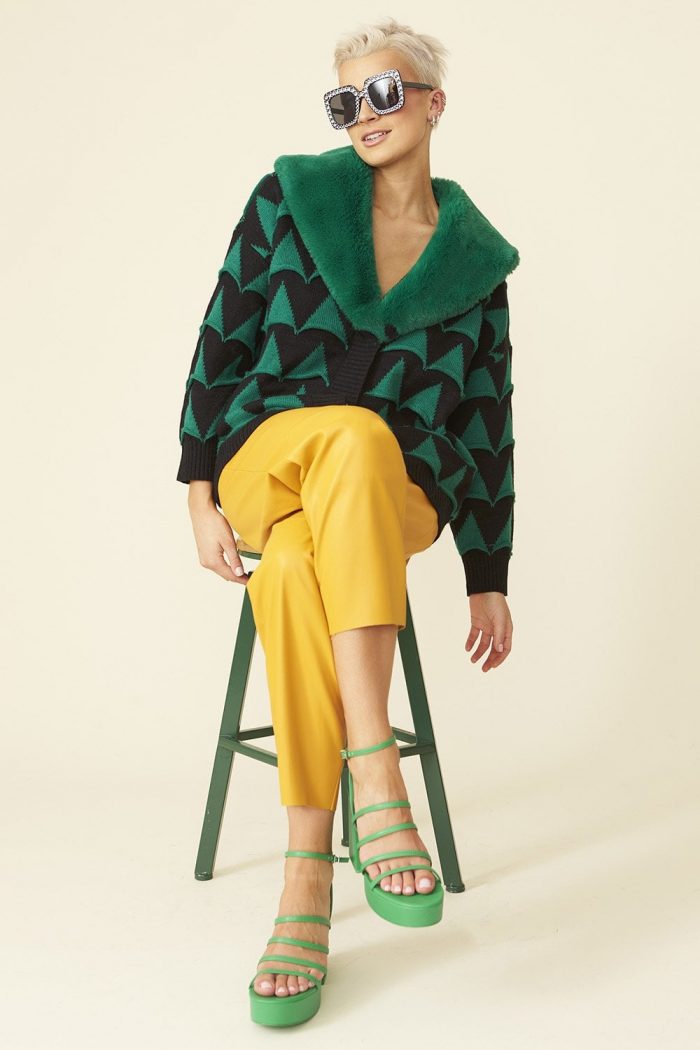
Jayley Cashmere and Banana Blend Cardigan
If you want to dip your toe into the faux fur trend first, or you’re looking for even more ways to incorporate it into your looks, our collection of faux fur accessories is the place for you.
Stay warm in style with our faux fur hats, gloves and scarves – available in a beautiful range of colours and prints, from pastels and brights to classic monochrome styles.
Rock faux fur all year round with a statement faux fur bag from Jayley. Discover our extensive collection and find bags for every occasion, whether it’s a clutch bag to carry your night-out essentials or a faux fur tote bag to carry everything you need in spacious style. Or, why not browse our faux fur cross body and bum bags and find your new festival companion?
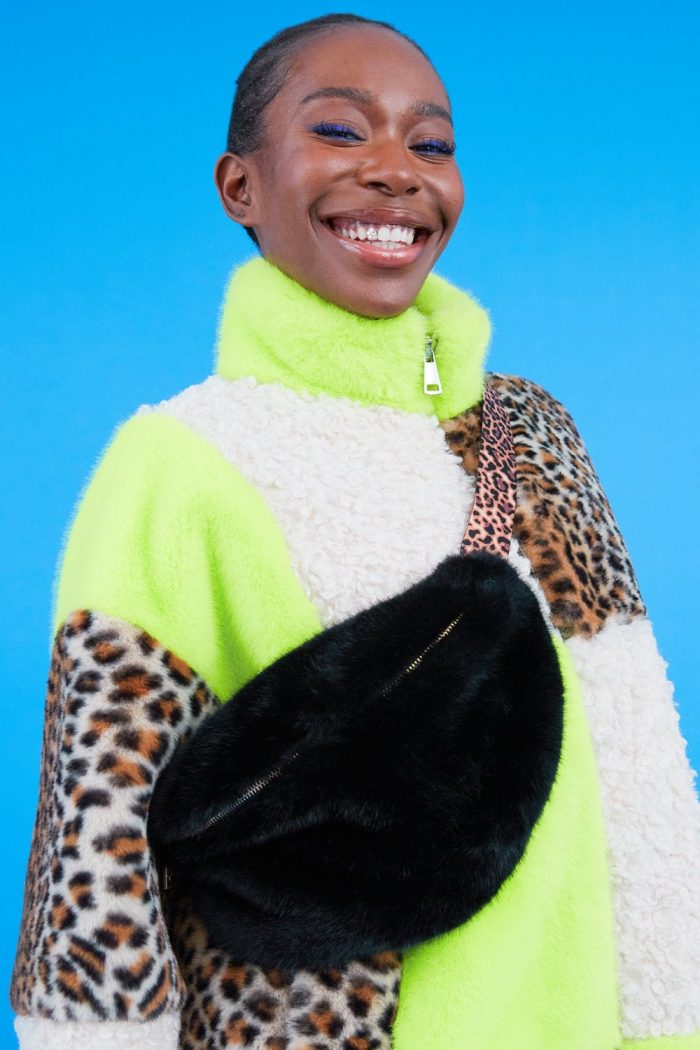
High-quality garments that will last a lifetime with the correct care, there’s never been a better time to shop faux fur and banish the cold. Discover the full faux fur collection at Jayley today and fall in love with your new wardrobe staples.
Comments are closed here.